Strategy
Business strategy is a series of choices
A promising idea is a beginning. Strategy asks which need deserves attention, who experiences it and which capabilities make a useful response possible. These questions connect ambition

Overview
A promising idea is a beginning. Strategy asks which need deserves attention, who experiences it and which capabilities make a useful response possible. These questions connect ambition to execution.
Understand the need
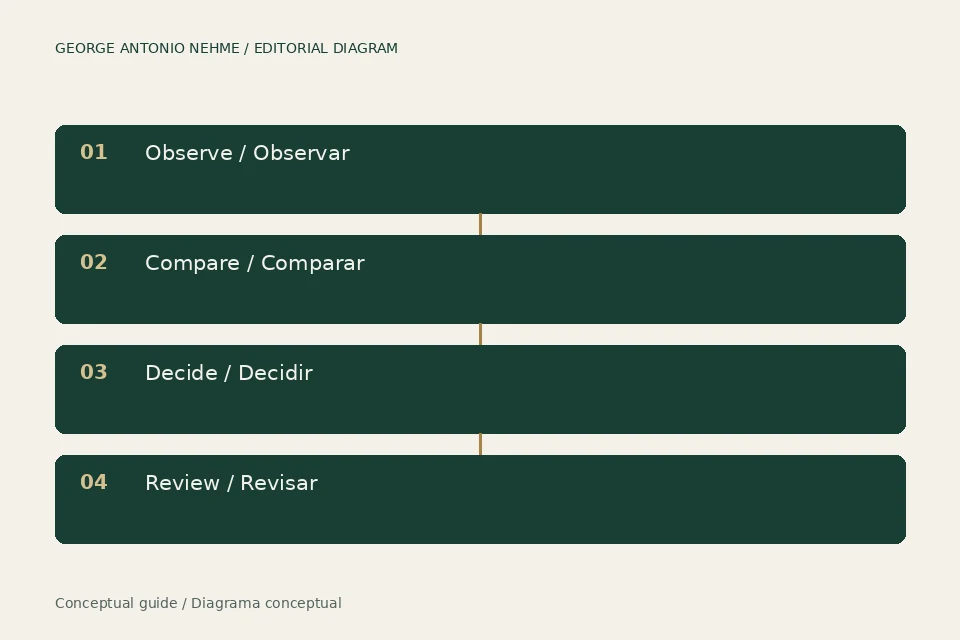
Observing a market is more useful when it starts with a specific question. What does a customer struggle to do? What alternatives exist? Where does an organization have the resources to make a meaningful difference?
Focus the effort
A strategy cannot fund every opportunity. Choosing a direction also means setting limits. Reviewing priorities against available time, skills and resources makes a plan more realistic.
Learn from execution
Choose observable signals before beginning. Review what happened, question the assumptions and adjust the approach. Growth becomes more sustainable when learning accompanies delivery.
An illustrative choice between two opportunities
Imagine a small service team considering two new offerings. One serves existing customers but requires a capability the team does not yet have. The other uses current skills but addresses an unfamiliar audience. Calling both opportunities strategic does not resolve the choice. List the assumptions behind each: access to customers, delivery effort, learning required and the consequence of being wrong. This is an illustrative planning exercise, not a case from the subject’s career. It creates questions that can be investigated before resources are committed.
Connect the promise to delivery
A clear value proposition should describe a need and the benefit of meeting it. It also needs a plausible delivery method. Ask what the organization must repeatedly do well for the promise to remain credible. If the proposed offer depends on rapid turnaround, for example, inspect the approval and handover steps that control that speed. A communication claim that the operating process cannot support creates a problem that more promotion alone will not solve. Use the gap to identify what needs testing.
Choose evidence before a test
Decide in advance what observation would justify continuing, adapting or stopping. For a small service trial, relevant evidence might concern whether customers understand the offer, whether delivery fits available capacity or whether repeated corrections reveal an unclear requirement. These are examples, not a universal scorecard. Choose signals that answer the actual uncertainty. Avoid selecting an attractive metric simply because it is easy to collect. A useful test connects its measurement to the decision that will follow.
A practical review note
Record the choice, the main assumption, the evidence sought and the next review point. When reviewing, distinguish a weak idea from a weak test: the audience may not have been reached, or the delivery process may have changed during the trial. Keep the reasoning visible so the next decision benefits from what happened. The result is a working strategy conversation rather than a document that remains unchanged. No framework removes uncertainty; it can only help organize a more explicit response to it.
Sources and context
This is an editorial guide, not a statement of personal experience by George Antonio Nehme.